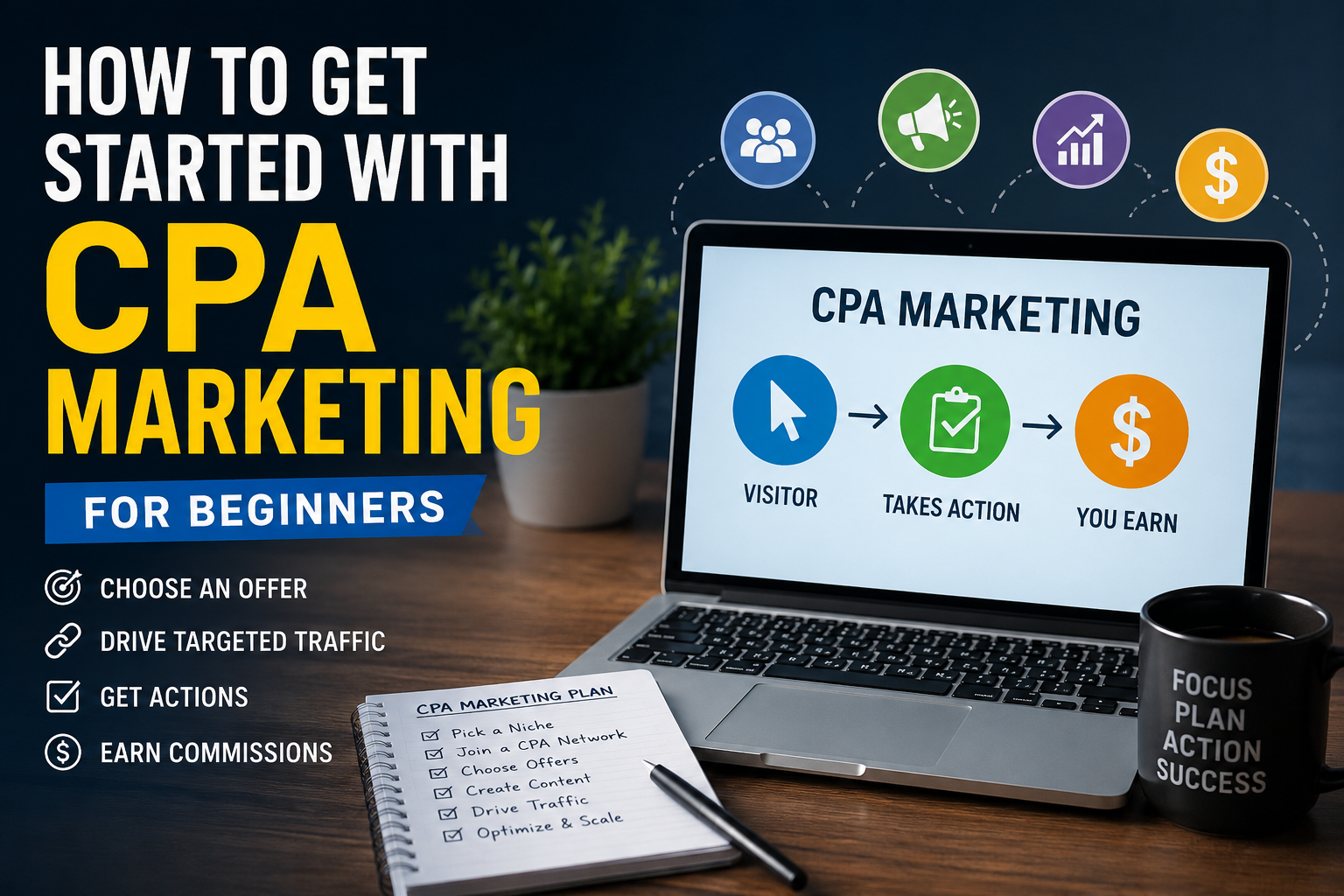
If you’re looking for a flexible way to earn money online, CPA marketing is an online business model worth learning about.
CPA marketing, or Cost Per Action marketing, is closely related to affiliate marketing. However, instead of always needing somebody to purchase a product before you earn a commission, you can potentially get paid when a visitor completes a specified action.
That action could be registering for a service, requesting a quote, installing an app, starting a free trial, or completing another action defined by the advertiser.
This can make CPA marketing for beginners particularly interesting because some offers don’t require the visitor to make a purchase.
But CPA marketing isn’t free money. You still need to find suitable offers, attract the right audience, create useful content, and follow the rules of both the CPA network and advertiser.
This beginner’s guide explains how it all works.
What Is CPA Marketing?
CPA stands for Cost Per Action or, in some contexts, Cost Per Acquisition.
It is a form of performance marketing in which an advertiser pays when a visitor completes a predetermined action.
For example, an advertiser might pay a publisher when someone:
- Registers for an account
- Requests information
- Downloads an app
- Installs software
- Enters a competition
- Starts a free trial
- Completes a qualifying survey
- Requests an insurance quote
- Makes a purchase
The precise requirements vary between individual campaigns.
The person promoting the offer is generally known as the publisher or affiliate.
How Does CPA Marketing Work?
The basic process is surprisingly straightforward.
Step 1 – The Advertiser Creates an Offer
Suppose a company wants more people to try its mobile app.
Instead of simply purchasing conventional advertising, the company could create a CPA campaign offering publishers a commission for each qualifying installation.
Step 2 – A CPA Network Lists the Offer
A CPA network acts as an intermediary between advertisers and publishers.
Publishers can browse available campaigns and choose suitable offers to promote.
Step 3 – You Promote Your Unique Tracking Link
Once you’ve selected an appropriate offer, you receive a unique tracking link.
You can then generate targeted visitors through permitted sources such as your website, blog, social media content, videos, or advertising.
Step 4 – A Visitor Completes the Required Action
If somebody follows your tracking link and completes the qualifying action according to the campaign’s rules, the conversion is recorded.
Step 5 – You Receive a Commission
Once the conversion has been validated, you can earn the commission specified by the campaign.
That’s the fundamental principle behind Cost Per Action marketing.
CPA Marketing vs Affiliate Marketing
CPA marketing and traditional affiliate marketing are closely related, but there can be an important difference.
With conventional affiliate marketing, you’re frequently paid when someone buys something.
CPA campaigns can pay for actions that happen before a sale.
For example:
Traditional affiliate offer:
Visitor → Affiliate Link → £50 Product Purchase → Commission
CPA offer:
Visitor → CPA Link → Free Registration → Commission
This doesn’t mean CPA marketing is automatically easier or more profitable.
Advertisers still expect genuine, high-quality leads, and conversions must satisfy the campaign’s conditions.
What Types of CPA Offers Are Available?
There are many different kinds of campaigns.
Lead Generation
The advertiser pays for qualifying leads, such as somebody requesting further information.
Industries using lead generation can include insurance, finance, education, home improvement, and professional services.
Free Trials
A company may pay publishers when new customers register for a qualifying trial.
App Installs
Publishers can potentially receive commissions when users download and install advertised applications.
Surveys and Competitions
Some campaigns reward publishers when eligible visitors complete surveys, competitions, or registrations.
Sales
Some CPA campaigns still require a purchase.
In this case, the required “action” is the sale itself.
How to Start CPA Marketing as a Beginner
You don’t necessarily need a huge website or thousands of followers to begin learning, but having a clear strategy makes a considerable difference.
Choose a Niche
Rather than promoting unrelated offers, choose an area you understand or are willing to learn about.
Possible niches include:
- Personal finance
- Gaming
- Technology
- Software
- Education
- Business
- Mobile apps
- Shopping
- Entertainment
A focused niche makes it easier to create useful content and attract an appropriate audience.
Create Your Traffic Source
Before applying to networks, consider where your visitors will come from.
You might create a:
- Blog
- Niche website
- YouTube channel
- Social media account
- Email newsletter
- Comparison website
You don’t necessarily need all of these.
One good traffic source is better than five neglected ones.
Join a CPA Network
CPA networks provide access to advertisers and their campaigns.
Some networks are beginner-friendly, while others have stricter application requirements.
When applying, be prepared to explain:
- Your website or content
- Your niche
- Where your traffic comes from
- How you intend to promote offers
Be truthful. Networks want legitimate publishers capable of delivering genuine leads.
How to Choose a CPA Offer
Don’t automatically choose the campaign offering the highest commission.
A lower-paying offer that closely matches your audience may perform significantly better.
Check the Target Country
Many CPA offers are geographically restricted.
A UK campaign, for example, might not pay for conversions generated by visitors in the United States.
Understand the Required Action
Read exactly what the visitor must do before a commission becomes payable.
Check Permitted Traffic Sources
Campaigns may place restrictions on traffic sources.
An advertiser might allow SEO traffic but prohibit certain forms of paid advertising, email promotion, incentives, or social media marketing.
Consider Audience Relevance
Ask yourself:
Would somebody consuming my content genuinely be interested in this offer?
If the answer is no, choose something else.
How to Get Traffic to CPA Offers
Traffic is arguably the most important part of CPA marketing.
Without visitors, even the best offer won’t produce conversions.
SEO and Blogging
Creating helpful articles around subjects people are already searching for can generate free website traffic from search engines.
For example, instead of publishing an article called:
“Click Here for This Software Offer”
you might publish:
“10 Tools That Can Help Freelancers Save Time Working From Home”
A relevant CPA offer can then form a natural part of genuinely useful content.
YouTube
Tutorials, demonstrations, comparisons, and educational videos can attract highly targeted audiences.
Social Media
TikTok, Facebook, Instagram, Pinterest, X, LinkedIn, and other platforms can all generate traffic depending on your niche.
Don’t simply spam affiliate links. Build an audience by publishing useful content first.
Email Marketing
An email list can become an extremely valuable marketing asset.
However, only promote CPA offers through email when both the network and individual advertiser permit it.
Paid Traffic
Experienced marketers sometimes use search, social, display, or native advertising to promote campaigns.
This approach carries considerably more financial risk because you’re paying for visitors before knowing how many will convert.
Beginners may find it safer to learn with organic traffic before committing substantial amounts to advertising.
Understanding CPA Marketing Numbers
Successful CPA marketers pay close attention to performance rather than simply counting clicks.
Conversion Rate
If 1,000 people visit your campaign and 30 complete the required action, your conversion rate is 3%.
Improving the relevance of your traffic can often increase conversions without increasing visitor numbers.
Earnings Per Click
Earnings Per Click, or EPC, helps you understand approximately how much revenue your traffic is producing per click.
It can be useful when comparing campaigns, although historical network statistics don’t guarantee what your traffic will achieve.
Return on Investment
ROI becomes particularly important when buying advertising.
If you spend £100 generating traffic and receive only £70 in commissions, you’ve lost £30 despite generating conversions.
This is why paid CPA campaigns require careful testing.
What Are Content Lockers?
Some CPA networks offer tools called content lockers.
A content locker requires visitors to complete an available action before accessing something.
That could potentially be:
- A download
- A guide
- Bonus material
- A resource
- Premium content
Content locking can be effective when used appropriately, but the visitor must understand what they’re being asked to do. You should also comply with the network’s rules and any applicable platform, advertising, privacy, and consumer-protection requirements.
Never use deceptive messages to trick people into completing offers.
Common CPA Marketing Mistakes
Promoting Everything
Jumping between unrelated offers makes building a targeted audience difficult.
Choose a niche and develop authority within it.
Spamming Links
Posting CPA links repeatedly across forums, social networks, or comment sections isn’t a sustainable marketing strategy and may violate platform or campaign rules.
Focus on attracting people who genuinely want what you’re promoting.
Ignoring Offer Restrictions
Always read campaign conditions before generating traffic.
An otherwise valid conversion may not qualify if it came from a prohibited source.
Using Fake Traffic or Leads
Never generate fake registrations, complete your own offers, encourage fraudulent submissions, or manipulate conversions.
CPA networks actively monitor traffic quality, and fraudulent activity can lead to commissions being rejected and accounts being terminated.
Expecting Immediate Passive Income
CPA marketing is not initially passive.
Researching offers, producing content, attracting visitors, and analysing results all require work.
Over time, successful SEO articles, videos, and other evergreen content can potentially generate conversions with less day-to-day involvement.
Can CPA Marketing Be a Side Hustle?
Yes. CPA marketing lends itself particularly well to a work-from-home side hustle because it can be developed around existing commitments.
You can spend a few hours each week:
- Researching keywords
- Creating articles
- Producing videos
- Testing offers
- Building social audiences
- Analysing conversions
As your experience grows, you can expand the campaigns that work and discontinue those that don’t.
The important thing is to approach CPA marketing as a real online business rather than a get-rich-quick scheme.
How Much Money Can You Make With CPA Marketing?
There is no reliable universal figure.
Earnings depend on factors including your traffic volume, audience quality, niche, geographical location, conversion rates, commission levels, promotional methods, and experience.
Some beginners may earn nothing while learning. Others may gradually develop campaigns that produce supplementary income. Experienced performance marketers can operate much larger businesses.
Treat screenshots and exceptional income claims cautiously. Nobody can guarantee how much you’ll make from CPA marketing.
A Simple CPA Marketing Strategy for Beginners
You don’t need an overly complicated system.
A sensible starting strategy could look like this:
Choose one niche → Build one traffic source → Join a reputable CPA network → Select relevant offers → Create useful content → Attract targeted visitors → Measure conversions → Improve what works.
For example, you could create a niche blog containing genuinely useful articles, build organic search and social traffic, and introduce relevant CPA offers where they naturally help readers.
As you gather data, you’ll begin discovering which topics, audiences, and offers perform best.
Is CPA Marketing Worth Trying?
For someone interested in digital marketing, CPA marketing can be an interesting side hustle because it teaches valuable skills including:
- Content marketing
- SEO
- Website building
- Conversion optimisation
- Analytics
- Social media marketing
- Affiliate marketing
- Paid advertising
Those skills can be useful even if CPA marketing doesn’t eventually become your primary income source.
Startup costs can also be relatively modest if you begin with a simple website and focus on organic traffic.
Final Thoughts
CPA marketing for beginners can appear complicated at first, but the underlying business model is simple: connect the right audience with an advertiser and earn a commission when a qualifying visitor completes the required action.
The challenging part is generating targeted traffic and consistently matching visitors with appropriate offers.
Instead of searching for shortcuts, concentrate on building a genuine online asset—a useful website, YouTube channel, social following, or email audience. Learn what your audience needs and introduce relevant CPA campaigns where they make sense.
Start small, monitor your results, follow advertiser rules carefully, and reinvest your time into the strategies that work.
With patience and consistent effort, Cost Per Action marketing can become another potential income stream within a diversified online side-hustle business.
Find out more in our other CPA Marketing article by clicking here.
Leave a Reply
You must be logged in to post a comment.